When Wax or a Finish is Not Enough
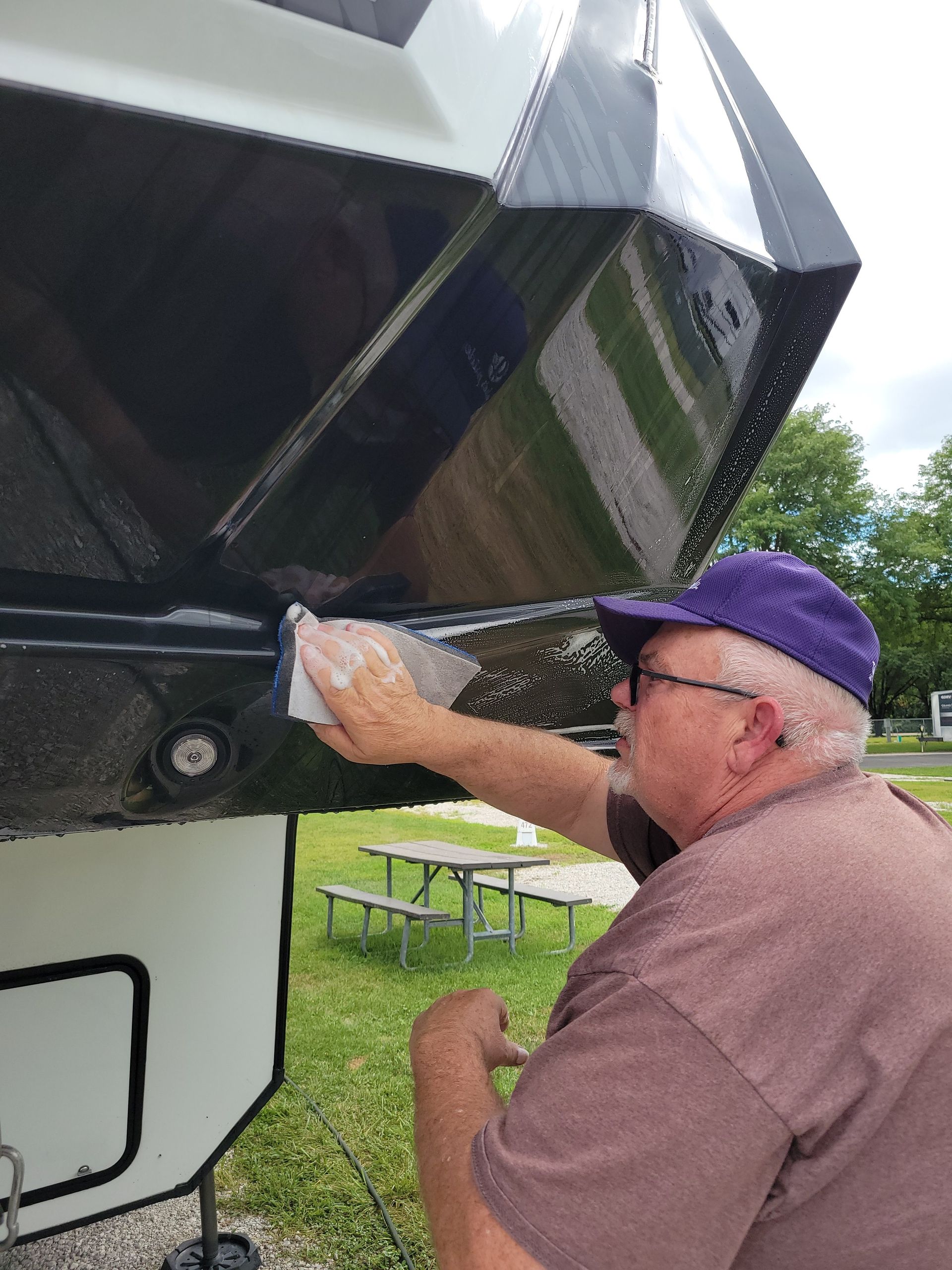
Wax is a crucial tool for keeping the exterior or your RV healthy. Gabe’s Pride does NOT sell wax. But we interact with it a LOT. We found this blog at RV Life to be a helpful, unbiased look at wax options. But it cannot fix existing deep chalkiness. Chalkiness is an advanced stage of degradation on your RV exterior. If an RV's fiberglass has developed severe oxidation, it typically requires a multi-step restoration process. This restoration usually involves compounding, polishing, and then waxing the surface.
The CONS for waxing your RV
Applying traditional wax over an RV finish comes with significant drawbacks.
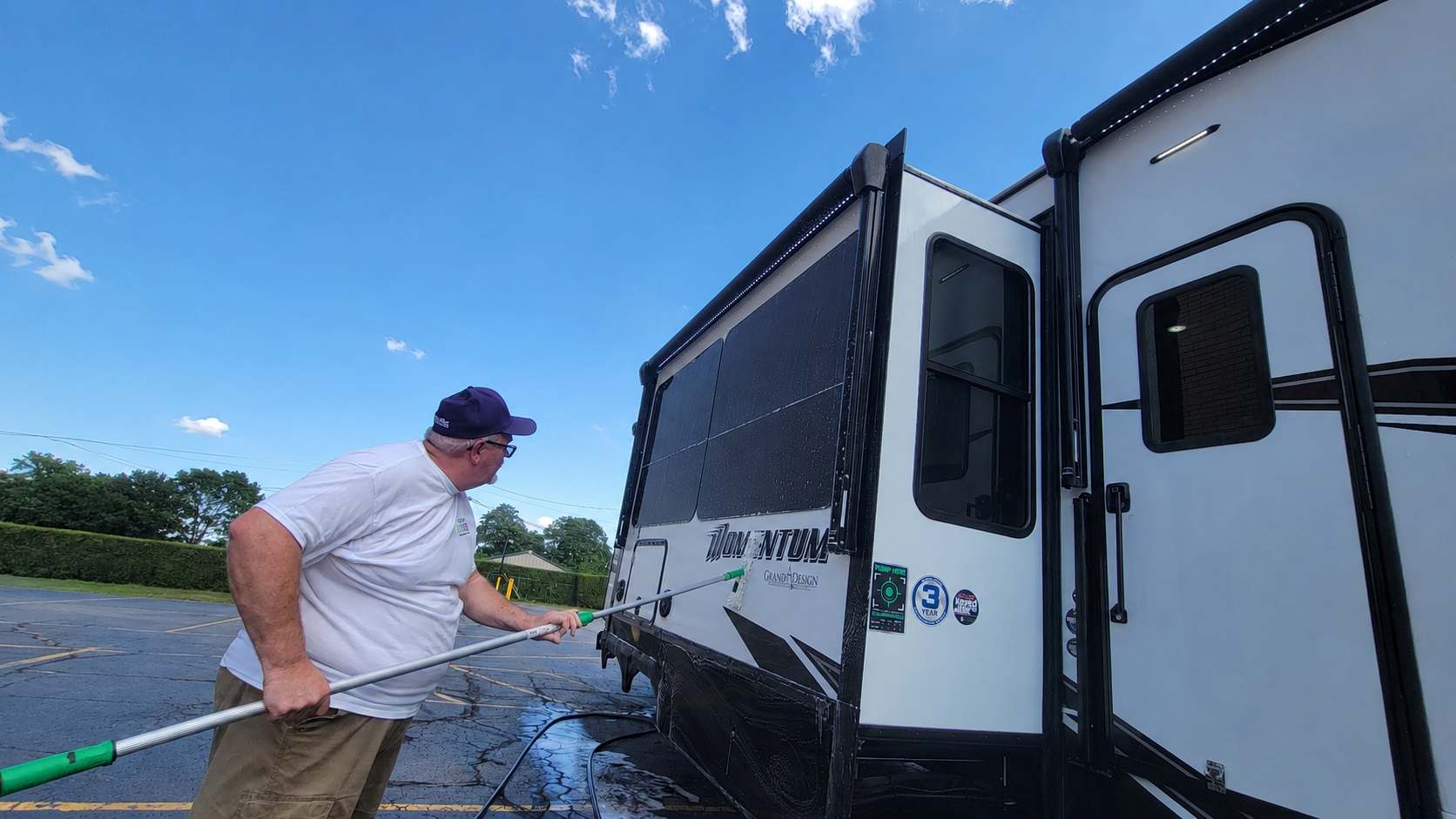
- Time Commitment: The first is the most obvious - Size. Due to the vehicle's sheer mass and harsh outdoor exposure, waxing your RV is a big job. Manually washing and applying paste wax to a 40-foot rig is exhausting and can take multiple days.
- It’s Temporary: While wax offers a quick gloss, its UV protection and water-repelling qualities typically degrade in just 1 to 3 months, meaning you will need to re-wax multiple times a season to maintain its benefits.
- Working on Oxidized Gel-Coat: Traditional paste wax will leave an oxidized, faded fiberglass finish looking smudgy, greasy, and streaky. To overcome this, you’ll need to strip the oxidation. This is often accomplished with a polish or heavy wash before wax can be applied.
- Slide-Out Malfunctions: Waxing the side walls of slide-outs makes the surfaces incredibly slick. Users report that this slickness sometimes prevents the rubber wiper seals from "flipping" correctly, which can lead to leaks and seal damage. While we have not heard this from everyone, we do suggest you consider not waxing the slideouts on your RV.
- Decal Buildup: Some older or porous decals can absorb wax, causing a cloudy, milky-white buildup in the pores over several applications. You may want to test an area before waxing these.
- Environmental Limitations: You cannot apply wax in direct sunlight or on a hot surface, as it will cure too quickly, bake onto the finish, and become a nightmare to buff off.
Better Alternatives to Wax
For RVs with gel-coat or fiberglass surfaces, modern synthetic products are generally preferred over traditional carnauba wax.
- Polymer Sealants: Products marketed as synthetic waxes (like polymer paint sealants) chemically bond to the surface rather than just sitting on top, providing 4 to 6 months of durability. They are typically easier to apply and buff off than natural wax.
- Ceramic Coatings: Liquid polymers create a much harder, slicker bond to the clear coat or gel-coat than traditional wax. According to industry consensus, ceramic coatings offer superior UV rejection and can last anywhere from 1 to 5 years, greatly cutting down on maintenance time between washes. See more information on ceramic coatings, here.
Regardless of the coating you select, focus on the most vital factors: safety for surfaces, the environment, and people. Consider the efficiency of the cleaning process, evaluating the tools, products, time, and energy required. You can find safe, effective options like Gabe’s Pride RV Streaker Deep Cleaning Concentrate that simplify the entire process.
In a recent blog, we discussed How Your Cleaner Should Affect Your Wax Layer. In this, we covered effective and ineffective cleaners and how they should interact with your wax layer. In our opinion a good cleaner DOES strip away a layer of wax. By the same token, it WILL NOT affect or damage a healthy finish. If the cleaner you’re using doesn’t meet those 2 criteria, please check out our Eco Friendly products.
Ditch the Elbow Grease
One of the things I LOVE about the RV community is the desire to help. Most of those you meet are more than happy to lend a hand to someone in need. And since we all know that the act of driving a living space across states can “rattle a few things”, we know there’s some effort in the RV Lifestyle. So, accepting that some things just require physical effort is fine. But if doing a better job means letting the tools do the work for you, that's not being “lazy”, that’s working-smart! When it comes to cleaning your RV exterior, if you’re using “elbow grease” that means your cleaner isn’t doing the job. See our customer testimonials here. Gabe’s Pride Streaker will help you with that chore and you won’t regret that choice. Our products are easy on you and mother-Earth, too.
Real People
Produced and manufactured in the USA, Gabe’s Pride is a family-owned company. We focus on producing top-quality cleaners that are Eco-Friendly. So when you have questions, you can contact us here.
Share this article with your friends