The Magic Of Microfiber - Do Microfiber Cloths Clean More Than Just Glasses?

Reduce the time and energy you spend cleaning your RV by investing in a microfiber cloth! 
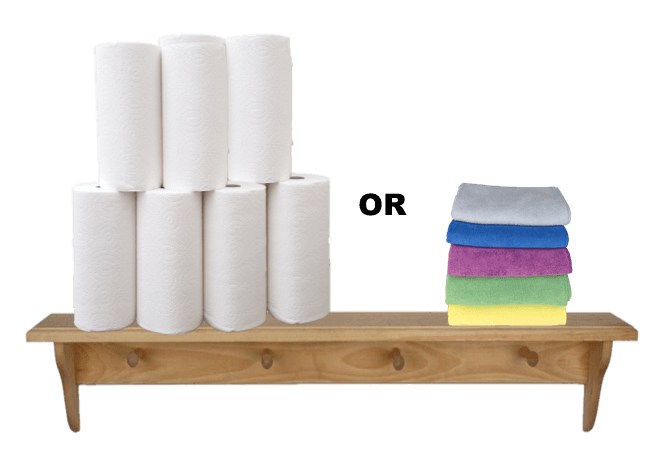
Microfiber cloths

One of our favorite cleaning tools to use is the humble yet magical microfiber cloth. The microfiber cloth is one of the cleaning industry's best creations. It makes cleaning more manageable, more efficient, and more cost-effective. 


Microfiber cloths are microscopic synthetic, yarn-like fibers woven into a cloth. They're produced into wiping cloths, wet-mops, dust-mops, bonnets, and floor pads. 


When paired with a high-performance cleaner, the mystical microfiber cloth can do pretty much any cleaning job you need it to do. 


Reduce the time and energy you spend cleaning your RV by investing in a microfiber cloth! 


Don't believe us when we say they're literally the best cloth on the market? Let us convince you!


What is a microfiber cloth? 


Microfiber cloths are made of plastic - a blend of polyester and polyamide (otherwise known as nylon) to be exact. 


Microfiber cloths are created by forcing the plastics through a tiny pipe and heating them to weave together. These fused fibers then go through a splitting process: a controlled chemical process splits the microfibers to create openings in the thread.


The splitting process is the key to creating microfiber. Compared to the cotton towel, which only has a single cleaning surface per strand, the microfiber cloth has up to 200,000 fibers per square inch.This produces a multi-dimensional cleaning surface per strand which is great for grabbing dirt and grime.


The polyester in a microfiber cloth will scrape up the tiny dirt molecules, and the polyamide is hydrophilic, which means it likes water - a lot. So not only do microfiber cloths excel at getting rid of dust, they also have exceptional absorbency. 


Fun fact!
A microfiber cloth can absorb up to 7 to 8 times its weight in soil and liquid - imagine how handy that'll be when cleaning your RV! 


Unlike cotton fibers, microfibers trap water in the threads. They soak up the water and lock it in place, stopping it from leaving the cloth. 


The quality of the "microfiber" can vary in size and effectiveness. Holding a cloth up to the light and stretching it will give you a good idea of how tightly woven the fibers are and how effective they'll be. If you can see light through it there are less fibers per square inch and the quality will be less than microfiber cloths that are not as transparent. The more fibers per square inch means it’s a better quality microfiber and will last longer.
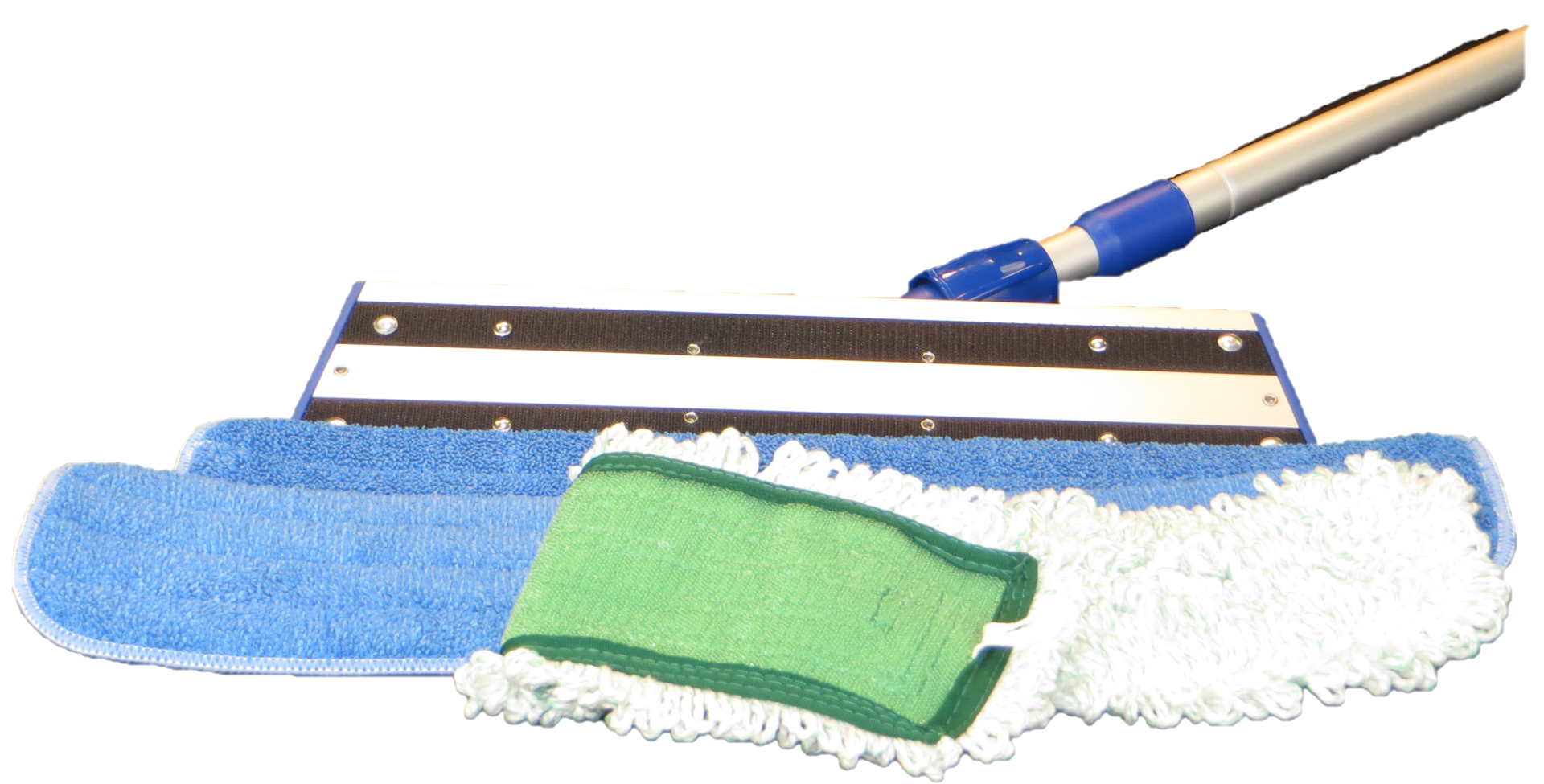
microfiber cloth

8 reasons why you should add microfiber cloths to your basket


What's so great about a microfiber cloth? It's just used for cleaning glasses and screens, right?


It might come as a surprise to you, but microfiber cloths have a lot of awesome benefits to them.


1. Microfibers won't leave any marks


Using a microfiber cloth to clean your surface won't leave a single scratch or any lint behind. This makes microfiber cloths the perfect choice for glass, but it's also an excellent option for counters, porcelain, chrome, wood, mirrors, and door handles. 


2.Microfiber cloths are versatile


Microfiber cloths are incredibly versatile and can be used to get rid of dust and dirt and mop up liquids on porous or non-porous surfaces. 


3. Microfiber cloths are hypoallergenic 


You won't have to worry about any allergens on the fibers. They're lint-free, which means no shedding or fraying.


4. Microfibers hold a positive static charge


The positive static charge microfibers have enables the cloth to hold onto the dust, which keeps it out of the air when dusting. This makes it the ideal tool for anybody with a dust allergy. 


5. Microfiber cloths don't push the dirt and grime 


Microfiber cloths have thousands of edges that allow them to break up surface dirt, absorb moisture and remove oils. 


If you're wondering if a cloth is a microfiber cloth, test it out by wiping a small puddle of water. If the water is pushed away instead of absorbed, the cloth isn't a microfiber cloth.


6. Remove more dirt


Depending on the quality of the cloth, a microfiber cloth can remove a lot more dirt from your surface than a regular cloth. 


7. Reduce the amount of cleaning product needed


Some people say that microfiber cloths can clean surfaces with just water, but the detergent is what’s needed to break up the soil. With a good quality product and microfiber cloth you will use less cleaner to complete the job because of the benefits of the microfiber. 


Microfiber cloths are perfect for enhancing your cleaning power. They help you spend less time, energy, and money cleaning your RV so you can spend more time enjoying it!


8. Microfiber cloths are sustainable 


Paper towels aren't recyclable, and so many trees are lost to keep up with the demand for paper towels every year. 110 million trees and 130 billion gallons of water are wasted to make paper towels each year, resulting in 254 million pounds of waste in the world alone. Single use disinfecting wipes are not biodegradable or recyclable. Both of these options just add to our landfills.


Although microfiber cloths are not biodegradable, they are still a better option than paper towels or single use disinfecting wipes. Microfiber cloths are a reusable cleaning tool  and the better the quality, the longer you can use them.


With the proper care, microfiber cloths will last for years


Microfibers can accumulate and spread soil and bacteria like other cleaning wipes and towels.


Don't just throw your microfiber cloths in the trash! Keep them clean, dry, and ready to use for your next cleaning task.


Here are some tips to help you take care of your microfiber cloths:


  • Don't wash with other fabrics - washing with different materials can release lint which will clog up the microfiber pores and ruin your cloth.
  • Avoid fabric softener or dryer sheets - these act as wax and seal the pores on your microfiber cloth, stopping it from being able to trap dust, water, and oils.
  • Don't use bleach or high heat - this will only damage or melt the fibers over time.
  • Avoid soaking your cloths in a lot of soap to avoid build-up in the fibers.
  • Just wash in cold water with a little detergent, rinse, squeeze out the water, and air dry.


With the proper care, your microfiber cloths will be able to help you clean for years to come!


Do you still doubt the power of a microfiber cloth? 


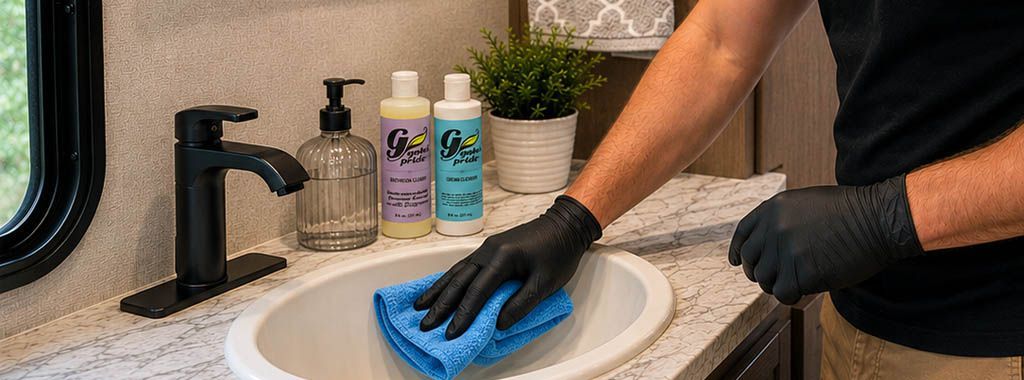
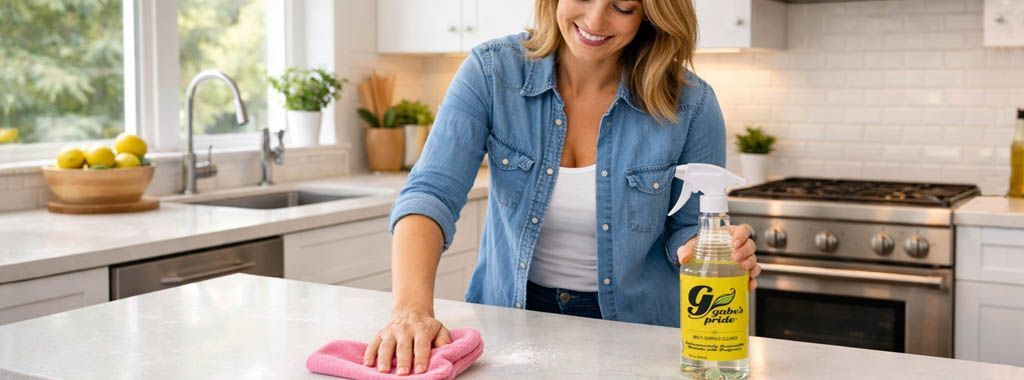
Try them for yourself next time you're cleaning your RV's bathroom and kitchen surfaces. You'll be amazed by how incredible they are at cleaning for you! 


Microfiber cloths come in a range of different colors, so you can even keep one for each area of the RV (interior, bathroom, exterior). Don't forget to pair them with your favorite cleaners! 


Cleaning your RV properly isn't magic. It's simply understanding some of the science behind cleaning!


Get your RV squeaky clean, and shiny by using a microfiber cloth to clean virtually any hard surface in your RV. You'll be amazed by the results! 


Check out all of Gabe's Pride microfiber cloths and mops in our store to stock up on all of your cleaning essentials.

Share this article with your friends

September 10, 2026
Using “elbow grease,” means your cleaner isn’t doing its job.
August 24, 2026
Wax is a crucial tool for keeping the exterior or your RV healthy . Gabe’s Pride does NOT sell wax. But we interact with it a LOT. We found this blog at RV Life to be a helpful, unbiased look at wax options . But it cannot fix existing deep chalkiness. Chalkiness is an advanced stage of degradation on your RV exterior. If an RV's fiberglass has developed severe oxidation, it typically requires a multi-step restoration process. This restoration usually involves compounding, polishing, and then waxing the surface. The CONS for waxing your RV Applying traditional wax over an RV finish comes with significant drawbacks. Time Commitment: The first is the most obvious - Size. Due to the vehicle's sheer mass and harsh outdoor exposure, waxing your RV is a big job. Manually washing and applying paste wax to a 40-foot rig is exhausting and can take multiple days. It’s Temporary: While wax offers a quick gloss, its UV protection and water-repelling qualities typically degrade in just 1 to 3 months, meaning you will need to re-wax multiple times a season to maintain its benefits. Working on Oxidized Gel-Coat: Traditional paste wax will leave an oxidized, faded fiberglass finish looking smudgy, greasy, and streaky. To overcome this, you’ll need to strip the oxidation. This is often accomplished with a polish or heavy wash before wax can be applied. Slide-Out Malfunctions: Waxing the side walls of slide-outs makes the surfaces incredibly slick. Users report that this slickness sometimes prevents the rubber wiper seals from "flipping" correctly , which can lead to leaks and seal damage. While we have not heard this from everyone, we do suggest you consider not waxing the slideouts on your RV. Decal Buildup: Some older or porous decals can absorb wax, causing a cloudy, milky-white buildup in the pores over several applications. You may want to test an area before waxing these . Environmental Limitations: You cannot apply wax in direct sunlight or on a hot surface, as it will cure too quickly, bake onto the finish, and become a nightmare to buff off. Better Alternatives to Wax For RVs with gel-coat or fiberglass surfaces, modern synthetic products are generally preferred over traditional carnauba wax. Polymer Sealants: Products marketed as synthetic waxes (like polymer paint sealants) chemically bond to the surface rather than just sitting on top, providing 4 to 6 months of durability. They are typically easier to apply and buff off than natural wax. Ceramic Coatings: Liquid polymers create a much harder, slicker bond to the clear coat or gel-coat than traditional wax. According to industry consensus, ceramic coatings offer superior UV rejection and can last anywhere from 1 to 5 years, greatly cutting down on maintenance time between washes. See more information on ceramic coatings, here . Regardless of the coating you select, focus on the most vital factors: safety for surfaces, the environment, and people. Consider the efficiency of the cleaning process, evaluating the tools, products, time, and energy required. You can find safe, effective options like Gabe’s Pride RV Streaker Deep Cleaning Concentrate that simplify the entire process.  In a recent blog, we discussed How Your Cleaner Should Affect Your Wax Layer . In this, we covered effective and ineffective cleaners and how they should interact with your wax layer. In our opinion a good cleaner DOES strip away a layer of wax. By the same token, it WILL NOT affect or damage a healthy finish. If the cleaner you’re using doesn’t meet those 2 criteria, please check out our Eco Friendly products. Ditch the Elbow Grease One of the things I LOVE about the RV community is the desire to help. Most of those you meet are more than happy to lend a hand to someone in need. And since we all know that the act of driving a living space across states can “rattle a few things”, we know there’s some effort in the RV Lifestyle. So, accepting that some things just require physical effort is fine. But if doing a better job means letting the tools do the work for you, that's not being “lazy”, that’s working-smart! When it comes to cleaning your RV exterior, if you’re using “elbow grease” that means your cleaner isn’t doing the job. See our customer testimonials here . Gabe’s Pride Streaker will help you with that chore and you won’t regret that choice. Our products are easy on you and mother-Earth, too. Real People Produced and manufactured in the USA, Gabe’s Pride is a family-owned company . We focus on producing top-quality cleaners that are Eco-Friendly. So when you have questions, you can contact us here .
By Pam Kennedy • July 31, 2026
How Your Cleaner Should Affect The Wax Layer
June 19, 2026
What is “Green” when it comes to cleaning?
May 27, 2026
Make Cleaning Easier and Eco-Friendly
February 17, 2026
Understanding the Term "Multi-Surface Cleaner"
make-bathroom-cleaning-easy-and-effective
September 15, 2025
Making your project to clean the bathroom successful every time
August 15, 2025
At Gabe’s Pride , we really enjoy our peeps in the RV community! Because we appreciate independence and time on the road, our conversations about cleaning needs cover a lot of ground. We’re thankful for our regular customers! And we appreciate the questions and specific cleaning challenges you bring us at Gabe’s Pride. While we ARE RV and home cleaning experts, gray tanks require a particular knack. That’s why we reached out to the team at Kleen Tank . We urge you to keep in mind that cleaning your gray tank demands time, care and most of all, safety. Why Does the Gray Tank Stink? Believe it or not, gray tanks can have worse odors and be more of a health risk than black tanks – especially galley grays. While black tanks are collecting urine, feces, water, cleaning materials and whatever didn’t “agree with you” last night, gray tanks get everything else. Laundry, Dishes & Heat. Oh My! Germs, bacteria and mold. All three are living things and all three require something from their environment to thrive. Those are: Food Water Heat Shelter  Unfortunately, we can find all of those in your RV’s gray tank. Food particles and a warm, moist environment inside your gray tank make this a perfect breeding ground for germs, bacteria and mold. Most people don’t think about Mold As we discussed in a previous blog, when cleaning your black , the most important ingredient is water! Mold can be trouble enough on its own. However, when mold gets dried out, it can become airborne. Once inhaled, mold can wreak all manner of havoc on your health . Headaches, congestion, cough, and many other symptoms are associated with exposure to mold spores. So what do you do? Because gray tanks generally don’t come with an on-board sprayer, using a reverse flush device is the best way for an RV owner to get extra water into that tank to help flush out food particulates. You may also consider using a water meter to prevent tank overflow. It's important to test the water meter before each use to make sure it's working correctly. To use or not to use an additive. Tank cleaning companies such as Kleen Tank do recommend using additives for cleaning your gray tank. Traditionally they use a Calgon base solution. This is used to coat the sides and prevent waste from sticking. The Kleen Tank team says “use plenty of water” to keep things liquid and moving both before and during the cleaning process. Should you choose to use a tank treatment product, consistency is important. Product formulations may be similar but are not identical. For this reason, frequently changing these may create a chemical reaction. Be careful and always read the instructions and use the product accordingly. When you’re looking for cleaning tips and tools for your RV or home, check us out our products and blogs . Since we’re part of the RV community ourselves, you may see us during this season’s rallies. Our Eco-Friendly cleaning materials are made right here in the USA. And we’re always happy to answer your home and RV cleaning questions. If you have a question that can’t wait, contact us here !
July 18, 2025
The Danger Probably ISN'T What You Think
By Pam Kennedy • April 29, 2025
Understanding WHAT you're using to clean surfaces is as important as HOW WELL you clean them.
Show More